Address
304 North Cardinal St.
Dorchester Center, MA 02124
Work Hours
Monday to Friday: 7AM - 7PM
Weekend: 10AM - 5PM
Address
304 North Cardinal St.
Dorchester Center, MA 02124
Work Hours
Monday to Friday: 7AM - 7PM
Weekend: 10AM - 5PM

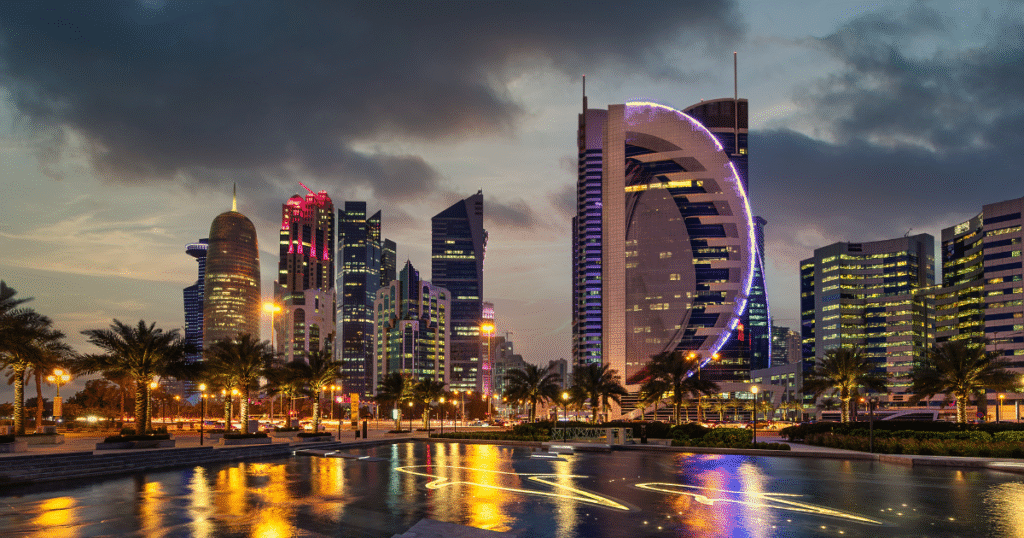
The Qatar Investor Visa Program allows qualified foreign investors to secure long-term residency through real-estate ownership in designated zones or shareholding/formation of Qatari companies. Oversight spans the Ministry of Interior (MOI) for residency procedures and the Ministry of Commerce & Industry (MOCI) for company licensing; property eligibility is grounded in the State’s framework for non-Qatari real-estate ownership. (moj.gov.qa)
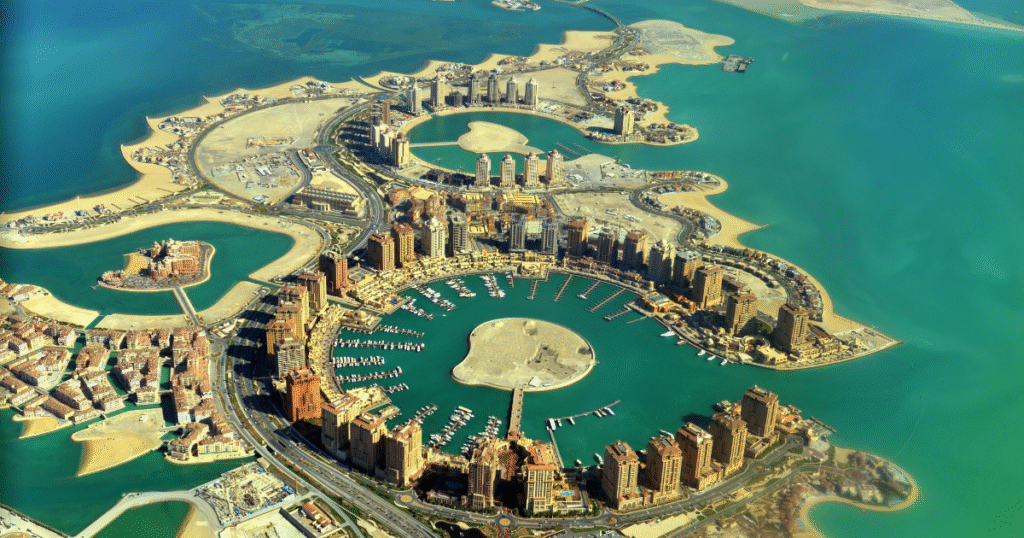
Qatar has progressively opened freehold and 99-year usufruct opportunities across the country (The Pearl, Lusail, West Bay Lagoon, etc.). This liberalization supports the Qatar National Vision 2030 by attracting foreign capital to property, finance, technology, and tourism. (Al Meezan)
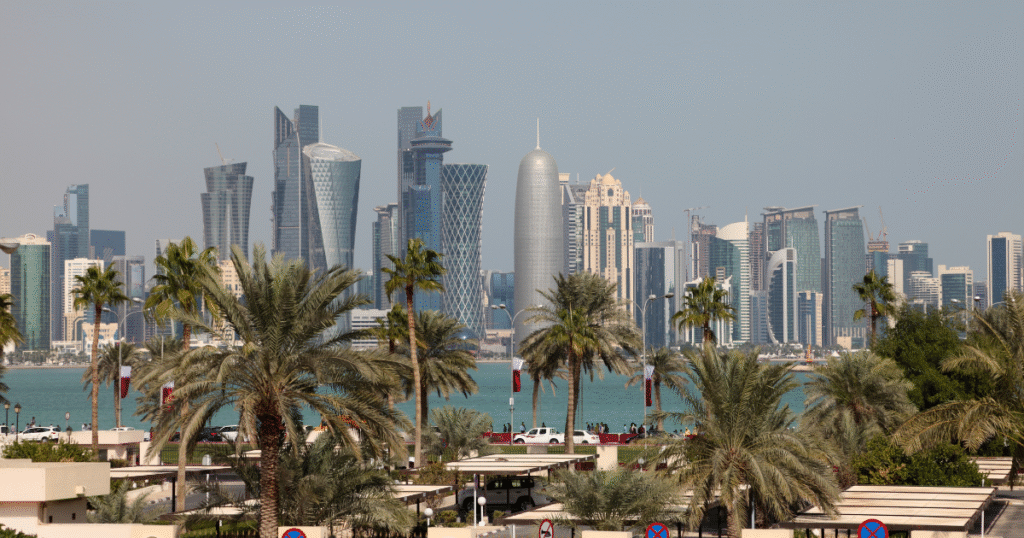
Qatar maintains one of the highest GDP per capita profiles and continues to streamline foreign-investment policy; the State created an Office for Non-Qatari Real Estate Ownership in 2020 to regulate and facilitate property purchases. (State Department)
Non-Qataris may own freehold or long-term usufruct in 25 areas (per Cabinet Decision No. 28 of 2020), including The Pearl, Lusail, and West Bay Lagoon. (Al Meezan)
Investor residency pathways allow spouse and children as dependents, with practical guidance via MOI and zone authorities/free-zone platforms for family permits. (Qatar Free Zones)
Qatar levies no personal income tax on individuals; corporate tax policies vary by structure/zone (e.g., QFZ/QFC). (State Department)
Residency holders enjoy multi-entry rights and hub access via Hamad International Airport, supporting quick travel across GCC/EU/Asia.
Fresh update: Local press report that Qatar is moving to issue title deeds and residency visas within days for eligible purchases of ≥ USD 200,000—aimed at accelerating the real-estate pathway. (Implementation timelines subject to MOI execution.) (The Economic Times)
(Free-zone entities generally sponsor their staff and dependents under zone-specific rules.) (qfc.qa)
Public practitioner updates reference an enhanced 10-year renewable residency track for investors holding QAR 5,000,000+ in approved real estate/projects, with added benefits (e.g., health/education). Always verify the live threshold and privileges with MOI before committing. (Investment Visa)
Processing time: commonly ~3–6 weeks for complete files (longer if background checks/attestations take time). (Investment Visa)
Applicants must:
Dependents: Spouse and children (commonly up to 25 in practice; verify MOI’s current age rule at filing); parents may be considered case-by-case under prevailing policy. (Family visa handling often occurs via MOI or zone HR.) (Qatar Free Zones)
| Benefit | Description |
|---|---|
| Residency validity | Typically 5–10 years, renewable; PR-card benefits at higher property tiers. (Fragomen) |
| Tax advantages | 0% personal income tax; zone-specific corporate incentives. (State Department) |
| Property ownership | Freehold in prime zones; 99-year usufruct options. (Al Meezan) |
| Family inclusion | Spouse & children as dependents (per MOI/zone rules). (qfc.qa) |
| Fast processing | ~3–6 weeks typical once investment verified. (Investment Visa) |
| Stable ROI | Practitioner/market notes often cite ~6–8% gross yields in select areas; confirm asset-by-asset. |
| Country | Min. Investment | Visa Term | Personal Income Tax | Ownership Rights |
|---|---|---|---|---|
| Qatar | QAR ~730k (residency via property) / QAR 3.65m (PR benefits); company routes vary | 5–10 yrs renewable | 0% | Freehold/Usufruct in designated zones |
| UAE | AED 1–2m typical bands (property/funds) | 5–10 yrs | 0% | Freehold zones |
| Saudi Arabia | Product-based (Annual/Lifetime; investor categories via PRC/MISA) | Annual–Lifetime | 0% | Full business ownership (per licenses) |
(Always confirm live thresholds and terms in official portals before committing capital.) (Investment Visa)
📘 Also see: UAE Residency by Investment and Saudi Arabia Investor Residency.
We collaborate with licensed Qatari law firms, MOI-approved consultants, and QFZA/QFC liaisons to deliver fast, compliant investor residency:
📞 Book your confidential consultation:
👉 Contact GlobalCitizenshipHQ.com
Q1: Can foreigners own property in Qatar?
Yes. 25 areas allow non-Qatari freehold/long-term ownership (e.g., The Pearl, Lusail, West Bay Lagoon). (Al Meezan)
Q2: What is the minimum investment for residency?
Current public guidance indicates ≈ USD 200k property in approved zones for a residency permit; USD 1m may qualify for PR-card benefits. Always verify with MOI at application. (Fragomen)
Q3: Can I include my family?
Yes—spouse and children are eligible; zone HR teams (e.g., QFZA/QFC) support family visa processing for company routes. (Qatar Free Zones)
Q4: How long does the process take?
Typical end-to-end timelines are ~3–6 weeks for complete property files; corporate/zone routes vary with licensing. (Investment Visa)
Q5: Are there personal taxes on my income?
Qatar has no personal income tax; corporate/withholding rules depend on your structure (QFZ/QFC/onshore). Seek tailored tax advice. (State Department)
The reference section below extends this article with the market-wide data, costs, process and answers our readers ask for most — maintained by the Global Citizenship HQ research desk and updated as programmes change.
One pattern from a decade of client files deserves emphasis: preparation time is the only variable applicants fully control. Government queues are what they are; document assembly, source-of-funds evidence and name-consistency work happen entirely on your side of the table. Files that invest six careful weeks before submission routinely finish months ahead of files that rushed to file and then fed deficiency letters for a year.
To place the topic above in market context, here is the current landscape at a glance — figures verified against official programme publications for 2026:
| Program | Minimum investment | Status granted | Presence required | Citizenship path |
|---|---|---|---|---|
| Portugal | €500,000 regulated funds | Golden Visa (renewable) | ~7 days/year | Eligible at 5 years (A2 test) |
| Greece | €250,000–€800,000 property | 5-year Golden Visa | None | 7 years genuine residence |
| UAE | AED 2M (≈US$545,000) property or fund | 10-year Golden Visa | Brief periodic entry | No practical path |
| Hungary | €250,000 fund units | 10-year Guest Investor permit | Minimal | 8 years + language |
| Italy | €250,000–€2M | 2-year Investor Visa (renewable) | None for permit | 10 years |
| Malta (MPRP) | €150,000–€200,000 total costs | Permanent residence | None | Discretionary only |
| Cyprus | €300,000 new property | Permanent residence | Visit every 2 years | Long residence |
| USA (EB-5) | US$800,000 TEA project | Conditional green card | Genuine relocation | 5 years after PR |
| New Zealand | NZD 5M (growth) / 10M (balanced) | Residence (never expires once PR) | 21 days (growth tier) | 5 years |
| Panama | US$300,000+ property/securities | Permanent residence in ~30 days | 1 visit / 2 years | 5 years (discretionary) |
| Paraguay | ≈US$70,000 SUACE plan | Permanent residence | Light | 3 years |
| Singapore | SGD 10M (GIP) | Permanent residence | Substantive | 2+ years (renounce others) |
Zoom out once before deciding anything: second citizenships and residence permits are decade-scale assets. Programme details will shift — prices ratchet upward, routes open and close, requirements tighten — but the strategic logic holds: jurisdictional diversification, acquired early and maintained compliantly, has outperformed waiting in every year this industry has existed.
Whatever route this article points you toward, the cost anatomy is consistent across the industry — and the headline figure is never the whole story:
| Cost component | Typical range | When paid | Notes |
|---|---|---|---|
| Government contribution / investment | US$90,000–US$800,000+ | After approval-in-principle | The headline figure; donation is consumed, property/bonds recoverable |
| Due diligence fees | US$7,500–US$15,000 per adult | At filing | Non-refundable; funds international background checks |
| Government processing fees | US$250–US$10,000 per person | At filing / approval | Varies sharply by programme and dependent count |
| Professional / legal fees | US$15,000–US$50,000 per family | Staged | File preparation, compliance, submission, post-approval support |
| Document costs | US$1,000–US$5,000 | Preparation phase | Apostilles, sworn translations, police certificates, courier |
| Passport & certificate fees | US$350–US$1,500 per person | After approval | Biometrics, issuance, oath administration where applicable |
| Property transaction costs (if applicable) | 4–10% of price | At closing | Transfer taxes, registration, agent commissions |
Rule of thumb across the industry: budget 15–25% above the headline contribution for a realistic all-in figure, and require an itemised fee schedule in writing before engaging any advisor.
From first consultation to passport or permit in hand, well-run applications follow a predictable arc:
Context worth holding while you compare options: investment migration is a treaty product. A passport’s value lives in the visa-waiver agreements behind it, and those agreements survive only where screening is credible. The programmes covered across our guides maintain their access precisely because refusals are real, interviews are standard, and information flows to partner governments — inconvenient for fraudsters, invaluable for legitimate families.
Every application in this field runs on the same documentary spine — assembled early, it is the single biggest determinant of your timeline:
The preparation standard that separates fast files from stalled ones: every name, date and address rendered identically across every document, validity windows mapped so nothing expires mid-process, and certified translations from recognised translators only.
If this topic touches your own plans, the efficient next step is a structured conversation: our specialists compare every programme mentioned here against your circumstances, produce a costed shortlist, and — when you proceed — prepare the file to the zero-deficiency standard that keeps timelines at the fast end of every range.
It helps to remember what these statuses are legally: citizenship is a relationship with a state that survives governments, marriages and market cycles; residence is a renewable licence with conditions. Both are valuable; only one is permanent. Pricing that difference correctly — rather than by sticker — is the core skill of this field.
| Mobility tier | Representative passports | Approx. visa-free reach | How investors access the tier |
|---|---|---|---|
| Tier 1 — Global elite | Singapore, Japan, Germany, France, Italy, Spain | 190–195 destinations | Naturalisation after residence programmes (Portugal 5 yrs is the engineered path) or ancestry claims |
| Tier 2 — Strong Western | UK, USA, Canada, Australia, New Zealand | 184–189 | Skilled migration, EB-5 (US$800k), NZ Active Investor Plus, then naturalisation |
| Tier 3 — Premium CBI | St Kitts & Nevis, Antigua, Grenada, St Lucia, Dominica | 143–150 incl. Schengen & UK | Direct purchase: US$200,000–250,000, 4–6 months |
| Tier 4 — Regional powers | Türkiye, and rising climbers like the UAE | 110–183 | Türkiye US$400k CBI; UAE citizenship not sold — 10-yr Golden Visa instead |
| Tier 5 — Budget documents | Vanuatu, Nauru, São Tomé, Cambodia, Egypt, Jordan | 54–95 | US$90,000–250,000; plan-B and regional value, not Europe access |
The tier logic explains most pricing in this industry: you are buying treaty networks. Moving up one tier is what the investment actually purchases; comparing programmes within a tier is where family policy, speed and route options decide.
Independent, official references informing this guide: