🌎 50+ Citizenship & Residency Programs | Passport Index 2026 | FAQ | Free Consultation →
GCGlobal Citizenship HQ Free Consultation
Ireland Residence by Investment 2026

🏗️ Country Cluster Page — Ireland Residence by Investment 2026

URL:
/residence-by-investment-ireland/

Page Role:
Country Authority Page (Residence by Investment – Europe)
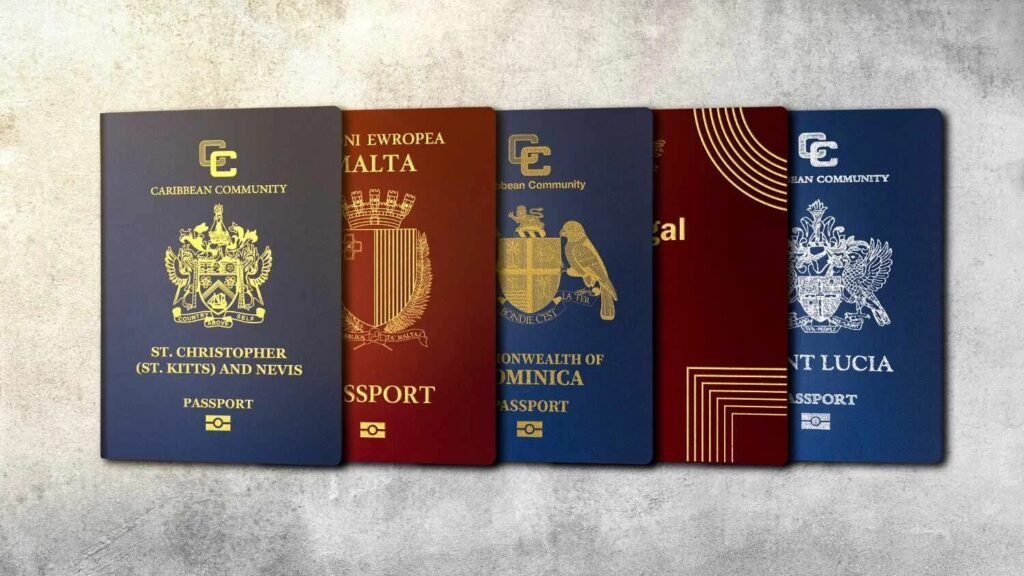


Benefits of Citizenship by Investment

H1

Ireland Residence by Investment 2026 – Investor Residency Program Guide


Introduction

Ireland offers a structured residence by investment framework designed for high-net-worth individuals seeking long-term European residency, economic stability, and access to the EU market.

Through approved investment routes, applicants may obtain legal residence permits with the potential to progress toward long-term residency and citizenship, subject to statutory conditions.

This page provides a clear, compliant, and up-to-date overview of Ireland’s residence by investment pathways.

Internal Links (Place at end of paragraph)

  • Comparison → /residence-by-investment-vs-citizenship-by-investment/
  • Costs → /residence-by-investment-cost/
  • Families → /residence-by-investment-for-families/

    Citizenship by Investment Cost

    What Is Ireland Residence by Investment?

    Ireland’s residence by investment framework allows qualifying investors to obtain legal residence permits by making an approved contribution that supports economic development, enterprise growth, or public benefit.

    Key Characteristics

    • Temporary residence permit (renewable)
    • No citizenship granted directly
    • Clear pathway to long-term residence
    • Strong regulatory oversight and due diligence

    Internal Link

    • Overview page → /residence-by-investment/

      How the Ireland Residence by Investment Program Works

      1. Select an approved investment option
      2. Prepare documentation and proof of funds
      3. Submit application to relevant Irish authorities
      4. Undergo enhanced due diligence
      5. Receive residence permission
      6. Maintain investment and residency conditions

      Internal Link


          Approved Investment Options in Ireland

          1. Enterprise Investment

          • Minimum investment: €1,000,000
          • Invested in Irish enterprise for at least 3 years
          • Focus on job creation and economic impact

          2. Investment Fund

          • Minimum investment: €1,000,000
          • Regulated Irish investment funds
          • Must remain invested for the required period

          3. Endowment (Philanthropic Contribution)

          • Minimum contribution: €500,000 (€400,000 in group cases)
          • Non-refundable contribution for public benefit

          Internal Links

          • Business route → /business-investment-residency/
          • Passive investment → /passive-income-residency-programs/

            Eligibility & Requirements

            Core Requirements

            • Minimum age: 18
            • Clean criminal record
            • Lawful source of funds
            • Approved investment maintained
            • Valid health insurance

            Family Inclusion

            • Spouse or partner
            • Dependent children under 18 (or financially dependent)

            Internal Link

            • Requirements hub → /residence-by-investment-requirements/
            • Checklist-style graphic

            Processing Time & Costs

            Table: Ireland Residence by Investment Overview

            CategoryDetails
            Minimum Investment€500,000 – €1,000,000
            Processing Time4–6 months
            Residence PermitRenewable
            Physical PresenceLimited

            Internal Link

            • Cost analysis → /residence-by-investment-cost/
            • Timeline graphic: Submission → Review → Approval

            Tax, Residency & Legal Considerations

            • Irish tax residency depends on physical presence
            • Residents may be taxed on worldwide income
            • Professional tax planning is strongly recommended
            • Full compliance required for renewals

            Internal Links

            • Legal risks → /legal-risks-residence-by-investment/
            • Diagram: Residency vs Tax Residency

            Residence by Investment for Families

            Ireland offers family-friendly residency, including:

            • Access to high-quality education
            • World-class healthcare
            • Stable and secure living environment

            Internal Link

              • Family lifestyle image (education-focused)

              Risks & Common Mistakes

              • Selecting unapproved investment structures
              • Failure to maintain investment duration
              • Misunderstanding tax residency obligations
              • Incomplete documentation

              Internal Link

              • Risk management → /legal-risks-residence-by-investment/

                Frequently Asked Questions

                • Is Ireland residence by investment permanent?
                • Can Ireland residency lead to citizenship?
                • Is physical residence required?
                • Can family members be included?

                Internal Link

                • FAQ hub → /residence-by-investment-faqs/

                  Why Choose Ireland for Residence by Investment?

                  • EU market access
                  • Strong rule of law
                  • English-speaking environment
                  • Robust economy and financial sector
                  • High standard of living

                  Internal Link

                  • Comparison page → /residence-by-investment-vs-citizenship-by-investment/
                  • Dublin business district / EU context image

                  ✅ STATUS UPDATE

                  Countries completed in this RBI cluster so far:

                  • Greece
                  • Iceland
                  • Italy
                  • Ireland (just completed)

                  🔜 NEXT COUNTRY IN YOUR LIST

                  Japan Residence by Investment 2026

                  If ready, say PROCEED and I will continue immediately without repetition.

                  Related Guides & Programs


                  The reference section below extends this article with the market-wide data, costs, process and answers our readers ask for most — maintained by the Global Citizenship HQ research desk and updated as programmes change.

                  The independence note that shapes our coverage: Global Citizenship HQ maintains programme data from primary sources — statutes, government gazettes and official fee schedules — and updates after every legislative change. Rankings and comparisons follow published methodology; where commercial relationships exist with programmes or developers, they never alter an editorial conclusion.

                  Residence Program Landscape: The Reference Table

                  To place the topic above in market context, here is the current landscape at a glance — figures verified against official programme publications for 2026:

                  ProgramMinimum investmentStatus grantedPresence requiredCitizenship path
                  Portugal€500,000 regulated fundsGolden Visa (renewable)~7 days/yearEligible at 5 years (A2 test)
                  Greece€250,000–€800,000 property5-year Golden VisaNone7 years genuine residence
                  UAEAED 2M (≈US$545,000) property or fund10-year Golden VisaBrief periodic entryNo practical path
                  Hungary€250,000 fund units10-year Guest Investor permitMinimal8 years + language
                  Italy€250,000–€2M2-year Investor Visa (renewable)None for permit10 years
                  Malta (MPRP)€150,000–€200,000 total costsPermanent residenceNoneDiscretionary only
                  Cyprus€300,000 new propertyPermanent residenceVisit every 2 yearsLong residence
                  USA (EB-5)US$800,000 TEA projectConditional green cardGenuine relocation5 years after PR
                  New ZealandNZD 5M (growth) / 10M (balanced)Residence (never expires once PR)21 days (growth tier)5 years
                  PanamaUS$300,000+ property/securitiesPermanent residence in ~30 days1 visit / 2 years5 years (discretionary)
                  Paraguay≈US$70,000 SUACE planPermanent residenceLight3 years
                  SingaporeSGD 10M (GIP)Permanent residenceSubstantive2+ years (renounce others)

                  The Real Cost Structure, Itemised

                  Whatever route this article points you toward, the cost anatomy is consistent across the industry — and the headline figure is never the whole story:

                  Cost componentTypical rangeWhen paidNotes
                  Government contribution / investmentUS$90,000–US$800,000+After approval-in-principleThe headline figure; donation is consumed, property/bonds recoverable
                  Due diligence feesUS$7,500–US$15,000 per adultAt filingNon-refundable; funds international background checks
                  Government processing feesUS$250–US$10,000 per personAt filing / approvalVaries sharply by programme and dependent count
                  Professional / legal feesUS$15,000–US$50,000 per familyStagedFile preparation, compliance, submission, post-approval support
                  Document costsUS$1,000–US$5,000Preparation phaseApostilles, sworn translations, police certificates, courier
                  Passport & certificate feesUS$350–US$1,500 per personAfter approvalBiometrics, issuance, oath administration where applicable
                  Property transaction costs (if applicable)4–10% of priceAt closingTransfer taxes, registration, agent commissions

                  Rule of thumb across the industry: budget 15–25% above the headline contribution for a realistic all-in figure, and require an itemised fee schedule in writing before engaging any advisor.

                  The regulatory backdrop matters to every decision on this page: since the 2024 Caribbean MOU established shared due-diligence standards and a US$200,000 price floor, and the European Court of Justice ended intra-EU citizenship sales in 2025, the market has consolidated around fewer, better-governed programmes. That consolidation is the buyer’s friend — surviving programmes defend their treaties vigorously because their entire value depends on them.

                  The Process Timeline, Step by Step

                  From first consultation to passport or permit in hand, well-run applications follow a predictable arc:

                  1. Weeks 1–2: Strategy and eligibility. Confirm the right programme against your passport portfolio, family composition, budget and objectives; identify any restricted-nationality or profile complications before money moves.
                  2. Weeks 2–8: Document assembly. Police certificates from every country of long residence (start the slowest jurisdictions first), civil documents, bank references and the source-of-funds evidence chain — apostilled and translated to programme standard.
                  3. Weeks 6–10: Compliance review and filing. Internal pre-screening against known refusal grounds, final file assembly, and submission through the authorised channel with due-diligence fees.
                  4. Months 2–5: Government due diligence. Multi-tier background verification, database checks and — in Caribbean programmes — the mandatory interview. Respond to any information requests within days, not weeks.
                  5. Months 4–6: Approval in principle. The government confirms your file passed; the qualifying investment is now completed within the programme deadline (typically 30–90 days).
                  6. Months 5–7: Naturalisation and passport. Certificate issuance, oath where required, biometrics, and passport delivery. Register any status with your banks proactively.
                  7. Ongoing: Compliance calendar. Holding-period end dates, passport renewals, newborn registrations and — for residence permits — renewal windows and presence logs.

                  The Document Checklist

                  Every application in this field runs on the same documentary spine — assembled early, it is the single biggest determinant of your timeline:

                  • Certified passport copies for every applicant (validity 6+ months beyond expected approval)
                  • Birth certificates — apostilled, with certified translations where not in English
                  • Marriage / divorce certificates documenting current family structure
                  • Police clearance certificates from every country of residence over 6–12 months (age thresholds vary)
                  • Source-of-funds evidence: bank statements, business accounts, sale contracts, inheritance or gift documentation
                  • Bank reference letters from institutions holding your primary relationships
                  • Professional reference and proof of occupation or business ownership
                  • Medical certificates including specified test results where required
                  • Passport-standard photographs to each programme’s specification
                  • Military service records where applicable
                  • Proof of residential address (utility bills, statements)
                  • Programme-specific forms — completed identically to supporting documents, to the letter

                  The preparation standard that separates fast files from stalled ones: every name, date and address rendered identically across every document, validity windows mapped so nothing expires mid-process, and certified translations from recognised translators only.

                  A planning principle that applies across every scenario above: sequence beats selection. The families with the best outcomes rarely found secret programmes — they executed ordinary ones in the right order: fast citizenship for immediate optionality, residence permits matched to actual living intentions, tax residency moved deliberately before liquidity events, and every dependent included at the cheapest possible moment.

                  Key Considerations Before You Commit

                  • Programme stability: favour statutes with functioning units and clean treaty records — and remember every historical closure grandfathered existing holders.
                  • Total cost honesty: model all-in figures (15–25% above headline), not brochure numbers.
                  • Family completeness: file every eligible dependent now; later additions are limited and pricier.
                  • Source-of-funds readiness: the documentation standard is bank-grade; build the narrative before applying.
                  • Dual-citizenship legality: confirm your current nationality tolerates the acquisition — before, not after.
                  • Passport utility for YOUR routes: check your ten key destinations against the actual treaty list, not aggregate counts.
                  • Exit mechanics: know the holding period and the realistic buyer at the end of it before choosing property routes.
                  • Tax layer separation: citizenship for mobility, residence for taxation — plan them as different decisions.
                  • Advisor verification: government-authorised agents only, checked against the official CIU lists.
                  • Timing: the market’s entire history rewards early applicants over waiting skeptics — prices ratchet one way.

                  How Global Citizenship HQ Can Help

                  Where our advisory desk fits: we run exactly this analysis against your specific passport, family and objectives — modelling the realistic all-in costs, flagging profile complications before they meet a due-diligence analyst, and managing authorised submission end-to-end. The first consultation is free, confidential and obligation-free.

                  Reading across the whole market rather than one programme at a time changes conclusions surprisingly often. Families who arrive certain they want a specific passport frequently leave with a two-instrument structure — a fast citizenship for permanence and a residence permit for lifestyle — because the combined cost of the right pair often undercuts forcing one product to do both jobs badly.

                  Where Every Passport Sits: The Mobility Tiers

                  Mobility tierRepresentative passportsApprox. visa-free reachHow investors access the tier
                  Tier 1 — Global eliteSingapore, Japan, Germany, France, Italy, Spain190–195 destinationsNaturalisation after residence programmes (Portugal 5 yrs is the engineered path) or ancestry claims
                  Tier 2 — Strong WesternUK, USA, Canada, Australia, New Zealand184–189Skilled migration, EB-5 (US$800k), NZ Active Investor Plus, then naturalisation
                  Tier 3 — Premium CBISt Kitts & Nevis, Antigua, Grenada, St Lucia, Dominica143–150 incl. Schengen & UKDirect purchase: US$200,000–250,000, 4–6 months
                  Tier 4 — Regional powersTürkiye, and rising climbers like the UAE110–183Türkiye US$400k CBI; UAE citizenship not sold — 10-yr Golden Visa instead
                  Tier 5 — Budget documentsVanuatu, Nauru, São Tomé, Cambodia, Egypt, Jordan54–95US$90,000–250,000; plan-B and regional value, not Europe access

                  The tier logic explains most pricing in this industry: you are buying treaty networks. Moving up one tier is what the investment actually purchases; comparing programmes within a tier is where family policy, speed and route options decide.

                  The Mistakes That Repeat (So Yours Don’t Have To)

                  • Shopping on headline price alone — the all-in figure and the passport’s fit for your routes matter more than a US$10,000 difference in contributions.
                  • Filing before documents are ready — deficiency letters cost months; six careful preparation weeks buy them back.
                  • Leaving eligible family off the application — adding later is limited, slower and pricier in every programme.
                  • Treating due diligence as an obstacle — it is the product; passports that survive scrutiny keep their treaties.
                  • Confusing residence permits with tax plans — permits grant rights; day counts and ties decide taxation.
                  • Buying programme real estate sight-unseen — the asset, not the route, determines your exit at year five.
                  • Using unauthorised intermediaries — verify every agent against the official government lists before any payment.
                  • Waiting for perfect certainty — every closure and price rise in this market’s history punished the undecided and grandfathered the committed.

                  How Fast This Market Moves: The Recent Change Log

                  The pace of change is itself a planning input. Recent seasons alone delivered:

                  • 2024: the Caribbean Memorandum of Agreement — US$200,000 price floor, shared due-diligence standards, mandatory interviews across all five programmes.
                  • April 2025: Spain terminated its golden visa; existing holders grandfathered — the pattern held again.
                  • April 2025: the European Court of Justice ruling ended Malta’s investor citizenship — and with it, priced citizenship inside the EU.
                  • 2025: Italy’s decree tightened citizenship by descent to two generations, reshaping the ancestry market overnight.
                  • 2025–2026: Europe’s EES biometric borders went live and ETIAS rollout began — visa-free travel became pre-authorised travel.
                  • Ongoing: Hungary’s guest investor programme matured, the UAE kept widening Golden Visa categories, and new entrants (São Tomé, Nauru, Vietnam) extended the market’s edges.

                  None of these changes stripped status from anyone who already held it. All of them repriced or restricted what later applicants could buy — the asymmetry that defines timing in this field.

                  Choosing Your Route: A Working Decision Framework

                  A decision framework that resolves most cases in one sitting: start from the outcome, not the programme. If you need a stronger passport within a year, direct citizenship by investment is the only product that delivers — shortlist by your actual destinations, then by family policy, then by route economics. If your goal is an eventual EU passport, buy the residence programme whose naturalisation clock you will genuinely satisfy — Portugal for minimal presence, Greece for property-led patience. If the objective is tax, choose the residence jurisdiction first (UAE, Italy’s flat tax, Greece’s non-dom, territorial systems) and let citizenship ride separately.

                  Then run the constraint check: dual-citizenship legality for your current nationality, military-service exposure for sons, source-of-funds documentability, and the honest presence question — how many days will your life actually allow where? Programmes fail families most often not on approval but on fit: the absentee who bought a residence-heavy route, the relocator who bought an absentee product. Match the instrument to the life, and the rest is paperwork.

                  Terms Worth Knowing

                  • Approval in principle: the government’s confirmation that due diligence passed — the trigger for completing your investment, and the reason donation-route capital is never at risk early.
                  • CIU: Citizenship by Investment Unit — the government agency that owns your file end to end.
                  • Holding period: the statutory years a qualifying investment must be retained after approval (3–7 depending on programme).
                  • Jus sanguinis: citizenship by bloodline — the legal basis of both descent claims and your children’s inheritance of a purchased citizenship.
                  • PEP: politically exposed person — a screening category demanding deeper documentation, not a bar to approval.
                  • Source of funds: the evidence chain proving your capital’s lawful origin — the single most consequential document set in any file.
                  • Tie-breaker rules: treaty tests (home, vital interests, habitual abode, nationality) that assign tax residence when two countries claim you.
                  • 90/180 rule: Schengen’s rolling short-stay allowance — the arithmetic that residence permits make irrelevant.

                  The interaction between programmes deserves more attention than it gets: a Caribbean passport changes how a golden-visa application reads (stronger travel profile), an EU residence changes how banks treat your Caribbean citizenship (established footprint), and a deliberate tax residence makes every other document in your life easier to explain. Portfolios compound; single purchases just sit there.

                  Authoritative Sources & Further Reading

                  Independent, official references informing this guide:

                  🌍 Choose your language (35)