Address
304 North Cardinal St.
Dorchester Center, MA 02124
Work Hours
Monday to Friday: 7AM - 7PM
Weekend: 10AM - 5PM
Address
304 North Cardinal St.
Dorchester Center, MA 02124
Work Hours
Monday to Friday: 7AM - 7PM
Weekend: 10AM - 5PM

Perfect — let’s move on to the next country cluster page:
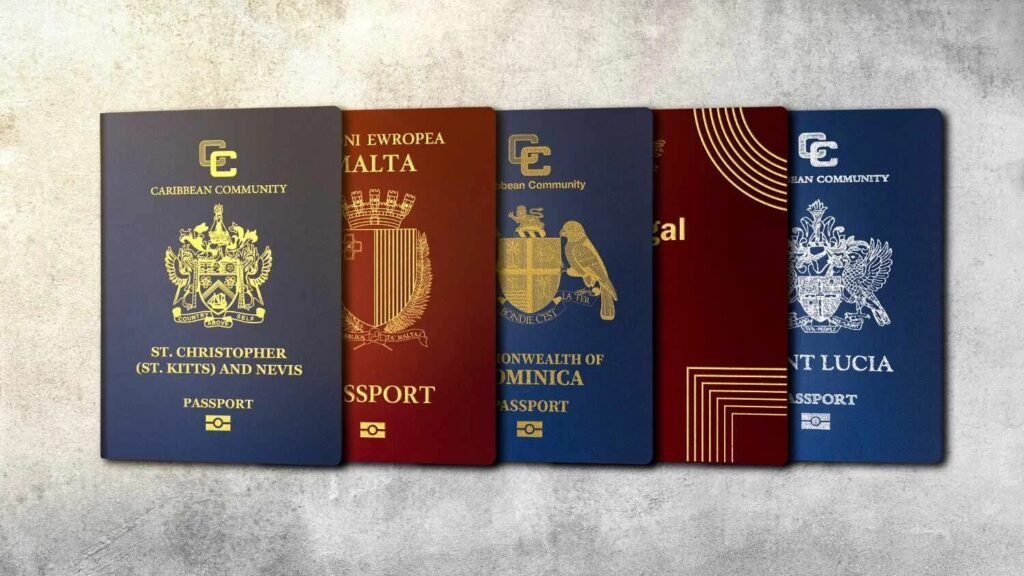
URL: /residence-by-investment-italy/
Page Role: High-Authority Country Cluster Page
Primary Keyword: residence by investment Italy
Secondary Keywords: Italy investor visa, Italian Golden Visa, Italy business residency, Italy property investment visa
Meta Title: Italy Residence by Investment 2026 – Investor & Business Visa Options
Meta Description: Discover Italy residence by investment programs 2026. Learn about investment types, eligibility, processing times, family inclusion, and legal requirements for investors.
Italy Residence by Investment 2026 – Investor & Business Visa Options
Italy offers residence by investment programs that provide investors and their families with legal residency, Schengen access, and strategic European opportunities.
This guide includes investment options, eligibility criteria, processing times, family benefits, tax considerations, and legal requirements for global investors.
Internal Links:
/residence-by-investment//residence-by-investment-vs-citizenship-by-investment//residence-by-investment-cost//residence-by-investment-for-families/Image Placement:
Italy residence by investment allows investors to obtain a residence permit through capital investment, business creation, or government-approved programs.
Key Features:
Internal Links:
/residence-by-investment/Image Placement:
Internal Links:
/residence-by-investment-application-process/Image Placement:
1. Government Bonds
2. Business Investment
3. Innovative Startup Investment
Internal Links:
/business-investment-residency//real-estate-residence-by-investment/Image Placement:
Key Requirements:
Internal Links:
/residence-by-investment-requirements/Image Placement:
Table 1 — Italy RBI Investment & Timeline
| Investment Type | Minimum Investment | Processing Time | Notes |
|---|---|---|---|
| Government Bonds | €500,000 | 3–4 months | Direct public projects |
| Business | €250,000 | 3–6 months | Must create jobs |
| Innovative Startup | €250,000 | 4–6 months | Certified startups |
Internal Links:
/residence-by-investment-cost/Image Placement:
Internal Links:
/residence-by-investment-tax-benefits//legal-risks-residence-by-investment/Image Placement:
Internal Links:
/residence-by-investment-for-families/Image Placement:
Internal Links:
/legal-risks-residence-by-investment/Image Placement:
Internal Links:
/residence-by-investment-faqs/Image Placement:
Internal Links:
/residence-by-investment-vs-citizenship-by-investment/Image Placement:
✅ Next Step:
The next country in the cluster is Ireland Residence by Investment 2026.
Shall I proceed with Ireland next?
You have not enough Humanizer words left. Upgrade your Surfer plan.
The reference section below extends this article with the market-wide data, costs, process and answers our readers ask for most — maintained by the Global Citizenship HQ research desk and updated as programmes change.
A planning principle that applies across every scenario above: sequence beats selection. The families with the best outcomes rarely found secret programmes — they executed ordinary ones in the right order: fast citizenship for immediate optionality, residence permits matched to actual living intentions, tax residency moved deliberately before liquidity events, and every dependent included at the cheapest possible moment.
Every application in this field runs on the same documentary spine — assembled early, it is the single biggest determinant of your timeline:
The preparation standard that separates fast files from stalled ones: every name, date and address rendered identically across every document, validity windows mapped so nothing expires mid-process, and certified translations from recognised translators only.
The independence note that shapes our coverage: Global Citizenship HQ maintains programme data from primary sources — statutes, government gazettes and official fee schedules — and updates after every legislative change. Rankings and comparisons follow published methodology; where commercial relationships exist with programmes or developers, they never alter an editorial conclusion.
To place the topic above in market context, here is the current landscape at a glance — figures verified against official programme publications for 2026:
| Program | Minimum investment | Status granted | Presence required | Citizenship path |
|---|---|---|---|---|
| Portugal | €500,000 regulated funds | Golden Visa (renewable) | ~7 days/year | Eligible at 5 years (A2 test) |
| Greece | €250,000–€800,000 property | 5-year Golden Visa | None | 7 years genuine residence |
| UAE | AED 2M (≈US$545,000) property or fund | 10-year Golden Visa | Brief periodic entry | No practical path |
| Hungary | €250,000 fund units | 10-year Guest Investor permit | Minimal | 8 years + language |
| Italy | €250,000–€2M | 2-year Investor Visa (renewable) | None for permit | 10 years |
| Malta (MPRP) | €150,000–€200,000 total costs | Permanent residence | None | Discretionary only |
| Cyprus | €300,000 new property | Permanent residence | Visit every 2 years | Long residence |
| USA (EB-5) | US$800,000 TEA project | Conditional green card | Genuine relocation | 5 years after PR |
| New Zealand | NZD 5M (growth) / 10M (balanced) | Residence (never expires once PR) | 21 days (growth tier) | 5 years |
| Panama | US$300,000+ property/securities | Permanent residence in ~30 days | 1 visit / 2 years | 5 years (discretionary) |
| Paraguay | ≈US$70,000 SUACE plan | Permanent residence | Light | 3 years |
| Singapore | SGD 10M (GIP) | Permanent residence | Substantive | 2+ years (renounce others) |
Whatever route this article points you toward, the cost anatomy is consistent across the industry — and the headline figure is never the whole story:
| Cost component | Typical range | When paid | Notes |
|---|---|---|---|
| Government contribution / investment | US$90,000–US$800,000+ | After approval-in-principle | The headline figure; donation is consumed, property/bonds recoverable |
| Due diligence fees | US$7,500–US$15,000 per adult | At filing | Non-refundable; funds international background checks |
| Government processing fees | US$250–US$10,000 per person | At filing / approval | Varies sharply by programme and dependent count |
| Professional / legal fees | US$15,000–US$50,000 per family | Staged | File preparation, compliance, submission, post-approval support |
| Document costs | US$1,000–US$5,000 | Preparation phase | Apostilles, sworn translations, police certificates, courier |
| Passport & certificate fees | US$350–US$1,500 per person | After approval | Biometrics, issuance, oath administration where applicable |
| Property transaction costs (if applicable) | 4–10% of price | At closing | Transfer taxes, registration, agent commissions |
Rule of thumb across the industry: budget 15–25% above the headline contribution for a realistic all-in figure, and require an itemised fee schedule in writing before engaging any advisor.
The regulatory backdrop matters to every decision on this page: since the 2024 Caribbean MOU established shared due-diligence standards and a US$200,000 price floor, and the European Court of Justice ended intra-EU citizenship sales in 2025, the market has consolidated around fewer, better-governed programmes. That consolidation is the buyer’s friend — surviving programmes defend their treaties vigorously because their entire value depends on them.
From first consultation to passport or permit in hand, well-run applications follow a predictable arc:
Visa-free passports get the Schengen 90/180-day allowance. A national residence permit (Greek or Portuguese golden visa) removes the limit for its issuing country entirely — unlimited presence there, plus the standard allowance across the rest of Schengen. Families wanting European lives buy the permit; travellers manage the count.
Not by itself — taxation follows residence, not nationality (the US is the famous exception, taxing citizens worldwide). A Caribbean passport changes your tax position zero; moving your tax residence to the UAE, a territorial system, or a flat-tax regime changes everything. Plan the two layers separately and deliberately.
A golden visa grants residence rights — renewable permission to live in a country — while CBI grants the passport itself. Golden visas can mature into citizenship through naturalisation (Portugal at 5 years is the benchmark); CBI delivers in months but from a smaller set of states. Many families hold one of each: mobility now, EU endgame in parallel.
Preparation typically consumes 4–8 weeks before filing; government processing then runs 2–3 months (Vanuatu), 4–6 months (Caribbean core) or 4–8 months (Türkiye). The applicant controls the largest variable — document readiness — which is why prepared files consistently land at the fast end of published ranges.
Take the headline contribution and add 15–25%: due diligence at US$7,500–15,000 per adult, government processing fees, professional fees, document legalisation and passport issuance. A single applicant on a US$200,000 donation typically completes around US$240,000–255,000 all-in; families scale with per-dependent fees rather than multiples of the base.
Turning research into an outcome: Global Citizenship HQ manages the full journey — strategy, document architecture, source-of-funds preparation, authorised filing, interview readiness and post-approval compliance. Families we advise typically move from first call to submitted application inside eight weeks.
{“@context”:”https://schema.org”,”@type”:”FAQPage”,”mainEntity”:[{“@type”:”Question”,”name”:”How much time in Europe do these statuses actually buy?”,”acceptedAnswer”:{“@type”:”Answer”,”text”:”Visa-free passports get the Schengen 90/180-day allowance. A national residence permit (Greek or Portuguese golden visa) removes the limit for its issuing country entirely u2014 unlimited presence there, plus the standard allowance across the rest of Schengen. Families wanting European lives buy the permit; travellers manage the count.”}},{“@type”:”Question”,”name”:”Will a second citizenship change my taxes?”,”acceptedAnswer”:{“@type”:”Answer”,”text”:”Not by itself u2014 taxation follows residence, not nationality (the US is the famous exception, taxing citizens worldwide). A Caribbean passport changes your tax position zero; moving your tax residence to the UAE, a territorial system, or a flat-tax regime changes everything. Plan the two layers separately and deliberately.”}},{“@type”:”Question”,”name”:”How is a golden visa different from citizenship by investment?”,”acceptedAnswer”:{“@type”:”Answer”,”text”:”A golden visa grants residence rights u2014 renewable permission to live in a country u2014 while CBI grants the passport itself. Golden visas can mature into citizenship through naturalisation (Portugal at 5 years is the benchmark); CBI delivers in months but from a smaller set of states. Many families hold one of each: mobility now, EU endgame in parallel.”}},{“@type”:”Question”,”name”:”How long does citizenship by investment take from start to finish?”,”acceptedAnswer”:{“@type”:”Answer”,”text”:”Preparation typically consumes 4u20138 weeks before filing; government processing then runs 2u20133 months (Vanuatu), 4u20136 months (Caribbean core) or 4u20138 months (Tu00fcrkiye). The applicant controls the largest variable u2014 document readiness u2014 which is why prepared files consistently land at the fast end of published ranges.”}},{“@type”:”Question”,”name”:”How much does citizenship by investment really cost all-in?”,”acceptedAnswer”:{“@type”:”Answer”,”text”:”Take the headline contribution and add 15u201325%: due diligence at US$7,500u201315,000 per adult, government processing fees, professional fees, document legalisation and passport issuance. A single applicant on a US$200,000 donation typically completes around US$240,000u2013255,000 all-in; families scale with per-dependent fees rather than multiples of the base.”}}]}The interaction between programmes deserves more attention than it gets: a Caribbean passport changes how a golden-visa application reads (stronger travel profile), an EU residence changes how banks treat your Caribbean citizenship (established footprint), and a deliberate tax residence makes every other document in your life easier to explain. Portfolios compound; single purchases just sit there.
| Mobility tier | Representative passports | Approx. visa-free reach | How investors access the tier |
|---|---|---|---|
| Tier 1 — Global elite | Singapore, Japan, Germany, France, Italy, Spain | 190–195 destinations | Naturalisation after residence programmes (Portugal 5 yrs is the engineered path) or ancestry claims |
| Tier 2 — Strong Western | UK, USA, Canada, Australia, New Zealand | 184–189 | Skilled migration, EB-5 (US$800k), NZ Active Investor Plus, then naturalisation |
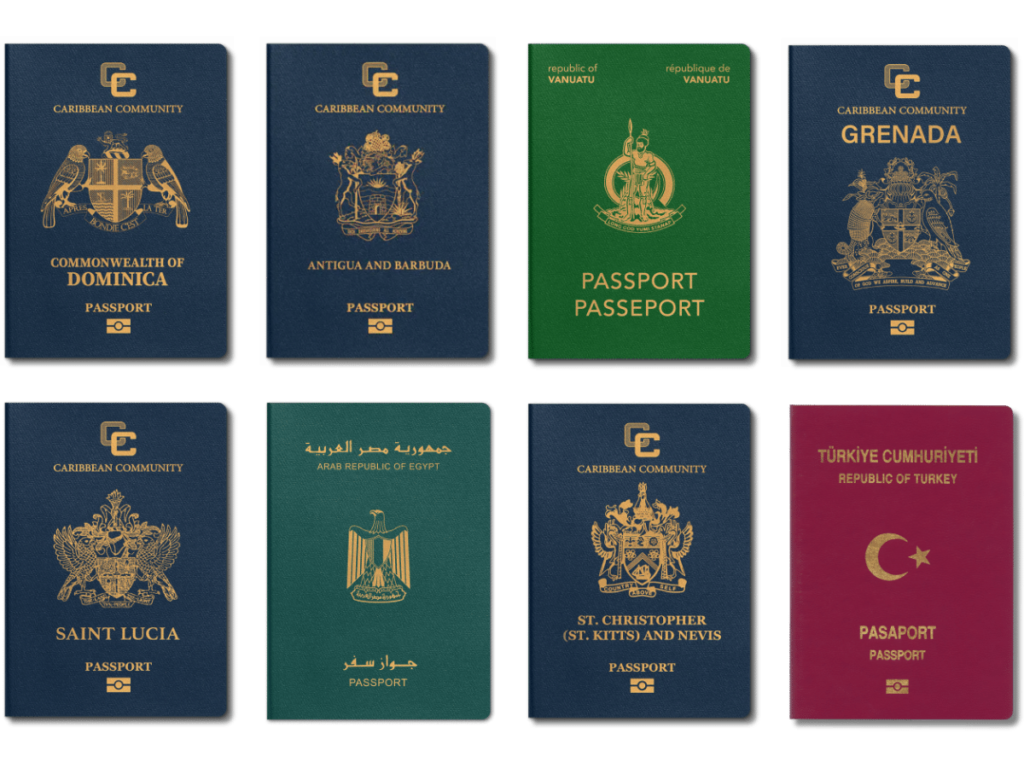
| Tier 3 — Premium CBI | St Kitts & Nevis, Antigua, Grenada, St Lucia, Dominica | 143–150 incl. Schengen & UK | Direct purchase: US$200,000–250,000, 4–6 months |
| Tier 4 — Regional powers | Türkiye, and rising climbers like the UAE | 110–183 | Türkiye US$400k CBI; UAE citizenship not sold — 10-yr Golden Visa instead |
| Tier 5 — Budget documents | Vanuatu, Nauru, São Tomé, Cambodia, Egypt, Jordan | 54–95 | US$90,000–250,000; plan-B and regional value, not Europe access |
The tier logic explains most pricing in this industry: you are buying treaty networks. Moving up one tier is what the investment actually purchases; comparing programmes within a tier is where family policy, speed and route options decide.
Reading across the whole market rather than one programme at a time changes conclusions surprisingly often. Families who arrive certain they want a specific passport frequently leave with a two-instrument structure — a fast citizenship for permanence and a residence permit for lifestyle — because the combined cost of the right pair often undercuts forcing one product to do both jobs badly.