Address
304 North Cardinal St.
Dorchester Center, MA 02124
Work Hours
Monday to Friday: 7AM - 7PM
Weekend: 10AM - 5PM
Address
304 North Cardinal St.
Dorchester Center, MA 02124
Work Hours
Monday to Friday: 7AM - 7PM
Weekend: 10AM - 5PM

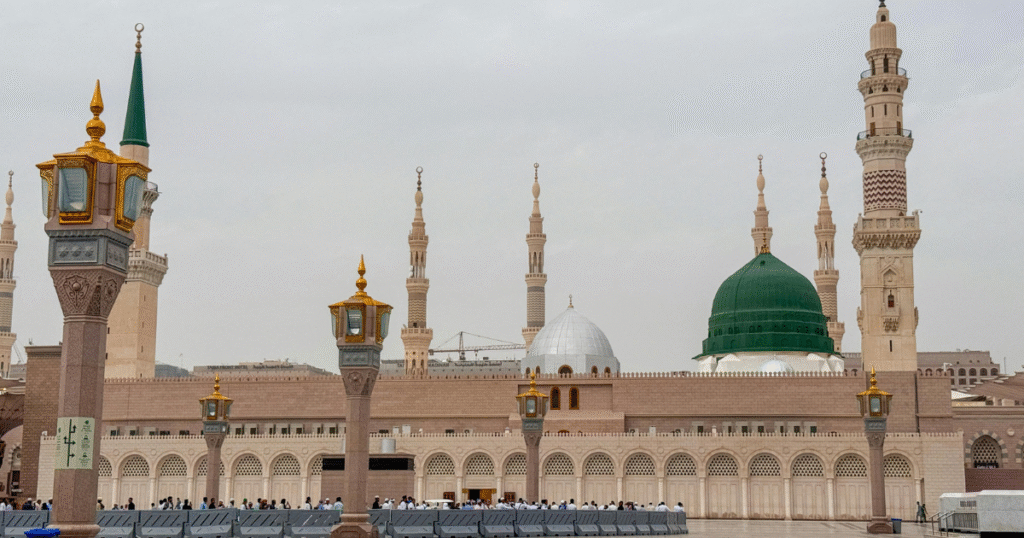

The Saudi Arabia Investor Residency Program—commonly branded as Premium Residency (الإقامة المميزة)—offers qualified investors and entrepreneurs a path to live, work, and own businesses in the Kingdom without a sponsor (kafala). The system is managed by the Premium Residency Center (PRC) under the Council of Ministers and operates on a dedicated government portal: pr.gov.sa. (pr.gov.sa)
First launched by Royal Decree in 2019, Premium Residency has since expanded into multiple product tracks (e.g., Investor, Entrepreneur, Real-Estate Owner, Special Talent, Gifted) to attract capital and skills under Vision 2030. (سعوديبيديا)
What you get, at a glance (per law/regulations):
Naming note: International media often call it “Saudi Green Card.” The official name is Premium Residency. (Wikipedia)
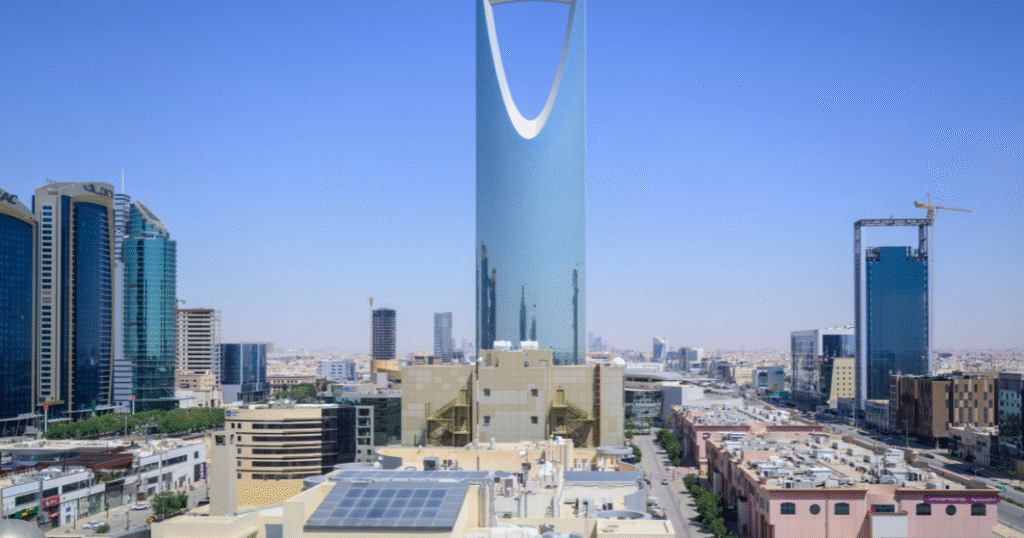
Foreign investors can fully own Saudi entities (with appropriate MISA licensing) and manage operations without a local sponsor—a fundamental shift from legacy frameworks. (my.gov.sa)
Saudi Arabia levies no personal income tax. Corporate taxation applies at the company level per sector rules; structuring is handled during MISA licensing. (General tax positioning, investors should obtain bespoke advice.)
Saudi sits at the crossroads of GCC–Africa–Asia trade corridors, with mega-projects (e.g., NEOM, Red Sea) opening avenues in logistics, tourism, clean energy, and advanced manufacturing—central to Vision 2030. (my.gov.sa)
Law and regulations recognise dependents (spouse, children, and parents with conditions), allowing cohesive relocation; specific conditions and work restrictions for dependents apply. (MISA)

Products range from annual renewable to unlimited duration (lifetime). Official tracks were expanded in 2024–2025 to better fit investors, entrepreneurs, and property owners. (UNCTAD Investment Policy Hub)
Fees and criteria can differ by product and are administered on pr.gov.sa. Below are the commonly referenced investor pathways and headline fees seen across official/industry guidance.

Applicants generally must:
Dependents (per law/regulations): spouse, children (age conditions vary by product), and parents as dependants who are not working in the Kingdom (per Implementing Regulations). (المركز الوطني للوثائق والمحفوظات)
Processing time: varies by product and completeness. Many applicants report ~4–8 weeks after a fully documented submission; plan conservatively for extra time during peak periods. (SaudiVisa.com)
| Benefit | Description |
|---|---|
| No sponsor required | Live and work independently (subject to sector rules). (MISA) |
| 100% foreign ownership | Own Saudi companies with MISA licenses. (my.gov.sa) |
| Family inclusion | Spouse, children, and (subject to conditions) parents as dependants. (المركز الوطني للوثائق والمحفوظات) |
| Banking & services | PR ID accepted across financial institutions (SAMA). (SAMA Rulebook) |
| Long-term certainty | Annual renewable or lifetime options; investor products added in 2024–2025. (UNCTAD Investment Policy Hub) |
| Country | Min. Capital (Investor route)* | Visa Term | Sponsor Needed | Personal Income Tax |
|---|---|---|---|---|
| Saudi Arabia | Product-based (Investor/Entrepreneur) via PRC; legacy references include SAR 4m for certain investor paths—confirm in PRC/MISA | Annual / Lifetime | ❌ No | 0% |
| UAE | AED 1–2m (typical property/investment bands) | 5–10 yrs | ❌ No | 0% |
| Qatar | QAR 1m (typical investor benchmarks) | 5 yrs | ❌ No | 0% |
* Benchmarks vary by category and year. Always verify current thresholds in the official portals before committing capital. (my.gov.sa)
📘 Also see internal resources:
We work alongside licensed Saudi immigration counsel and MISA-registered corporate service providers to deliver an end-to-end, compliant pathway:
📞 Book your confidential consultation:
👉 Contact GlobalCitizenshipHQ.com
Q1: Can I include my parents as dependents?
Yes—Premium Residency law/regulations allow parents as dependants provided they’re not working in the Kingdom and other conditions are met. (المركز الوطني للوثائق والمحفوظات)
Q2: What’s the fee for lifetime vs annual Premium Residency?
Public guidance widely references SAR 800,000 (lifetime) and SAR 100,000 (annual). Newer category products introduced in 2024–2025 (Investor/Entrepreneur/Real-Estate Owner, etc.) show SAR 4,000 application fees in several guides—confirm the current fee table inside pr.gov.sa before applying. (Wikipedia)
Q3: Can Premium Residency holders own real estate anywhere?
Ownership rights are broad, but special restrictions apply in Mecca, Medina and border areas. Check latest guidance in the PRC portal before purchasing. (The Times of India)
Q4: Do I still need a sponsor (kafeel) to work or run a business?
No. A central feature of Premium Residency is no sponsor requirement; you’ll still follow normal MISA licensing for regulated activities. (MISA)
Q5: How long does the process take?
Timelines vary by product and document readiness. Many applicants report ~4–8 weeks after a complete file; always allow buffer time. (Centuro Global)
The reference section below extends this article with the market-wide data, costs, process and answers our readers ask for most — maintained by the Global Citizenship HQ research desk and updated as programmes change.
The regulatory backdrop matters to every decision on this page: since the 2024 Caribbean MOU established shared due-diligence standards and a US$200,000 price floor, and the European Court of Justice ended intra-EU citizenship sales in 2025, the market has consolidated around fewer, better-governed programmes. That consolidation is the buyer’s friend — surviving programmes defend their treaties vigorously because their entire value depends on them.
To place the topic above in market context, here is the current landscape at a glance — figures verified against official programme publications for 2026:
| Program | Minimum investment | Status granted | Presence required | Citizenship path |
|---|---|---|---|---|
| Portugal | €500,000 regulated funds | Golden Visa (renewable) | ~7 days/year | Eligible at 5 years (A2 test) |
| Greece | €250,000–€800,000 property | 5-year Golden Visa | None | 7 years genuine residence |
| UAE | AED 2M (≈US$545,000) property or fund | 10-year Golden Visa | Brief periodic entry | No practical path |
| Hungary | €250,000 fund units | 10-year Guest Investor permit | Minimal | 8 years + language |
| Italy | €250,000–€2M | 2-year Investor Visa (renewable) | None for permit | 10 years |
| Malta (MPRP) | €150,000–€200,000 total costs | Permanent residence | None | Discretionary only |
| Cyprus | €300,000 new property | Permanent residence | Visit every 2 years | Long residence |
| USA (EB-5) | US$800,000 TEA project | Conditional green card | Genuine relocation | 5 years after PR |
| New Zealand | NZD 5M (growth) / 10M (balanced) | Residence (never expires once PR) | 21 days (growth tier) | 5 years |
| Panama | US$300,000+ property/securities | Permanent residence in ~30 days | 1 visit / 2 years | 5 years (discretionary) |
| Paraguay | ≈US$70,000 SUACE plan | Permanent residence | Light | 3 years |
| Singapore | SGD 10M (GIP) | Permanent residence | Substantive | 2+ years (renounce others) |
A planning principle that applies across every scenario above: sequence beats selection. The families with the best outcomes rarely found secret programmes — they executed ordinary ones in the right order: fast citizenship for immediate optionality, residence permits matched to actual living intentions, tax residency moved deliberately before liquidity events, and every dependent included at the cheapest possible moment.
Whatever route this article points you toward, the cost anatomy is consistent across the industry — and the headline figure is never the whole story:
| Cost component | Typical range | When paid | Notes |
|---|---|---|---|
| Government contribution / investment | US$90,000–US$800,000+ | After approval-in-principle | The headline figure; donation is consumed, property/bonds recoverable |
| Due diligence fees | US$7,500–US$15,000 per adult | At filing | Non-refundable; funds international background checks |
| Government processing fees | US$250–US$10,000 per person | At filing / approval | Varies sharply by programme and dependent count |
| Professional / legal fees | US$15,000–US$50,000 per family | Staged | File preparation, compliance, submission, post-approval support |
| Document costs | US$1,000–US$5,000 | Preparation phase | Apostilles, sworn translations, police certificates, courier |
| Passport & certificate fees | US$350–US$1,500 per person | After approval | Biometrics, issuance, oath administration where applicable |
| Property transaction costs (if applicable) | 4–10% of price | At closing | Transfer taxes, registration, agent commissions |
Rule of thumb across the industry: budget 15–25% above the headline contribution for a realistic all-in figure, and require an itemised fee schedule in writing before engaging any advisor.
From first consultation to passport or permit in hand, well-run applications follow a predictable arc:
The independence note that shapes our coverage: Global Citizenship HQ maintains programme data from primary sources — statutes, government gazettes and official fee schedules — and updates after every legislative change. Rankings and comparisons follow published methodology; where commercial relationships exist with programmes or developers, they never alter an editorial conclusion.
Every application in this field runs on the same documentary spine — assembled early, it is the single biggest determinant of your timeline:
The preparation standard that separates fast files from stalled ones: every name, date and address rendered identically across every document, validity windows mapped so nothing expires mid-process, and certified translations from recognised translators only.
Turning research into an outcome: Global Citizenship HQ manages the full journey — strategy, document architecture, source-of-funds preparation, authorised filing, interview readiness and post-approval compliance. Families we advise typically move from first call to submitted application inside eight weeks.
The interaction between programmes deserves more attention than it gets: a Caribbean passport changes how a golden-visa application reads (stronger travel profile), an EU residence changes how banks treat your Caribbean citizenship (established footprint), and a deliberate tax residence makes every other document in your life easier to explain. Portfolios compound; single purchases just sit there.
The pace of change is itself a planning input. Recent seasons alone delivered:
None of these changes stripped status from anyone who already held it. All of them repriced or restricted what later applicants could buy — the asymmetry that defines timing in this field.
A decision framework that resolves most cases in one sitting: start from the outcome, not the programme. If you need a stronger passport within a year, direct citizenship by investment is the only product that delivers — shortlist by your actual destinations, then by family policy, then by route economics. If your goal is an eventual EU passport, buy the residence programme whose naturalisation clock you will genuinely satisfy — Portugal for minimal presence, Greece for property-led patience. If the objective is tax, choose the residence jurisdiction first (UAE, Italy’s flat tax, Greece’s non-dom, territorial systems) and let citizenship ride separately.
Then run the constraint check: dual-citizenship legality for your current nationality, military-service exposure for sons, source-of-funds documentability, and the honest presence question — how many days will your life actually allow where? Programmes fail families most often not on approval but on fit: the absentee who bought a residence-heavy route, the relocator who bought an absentee product. Match the instrument to the life, and the rest is paperwork.
Independent, official references informing this guide:


